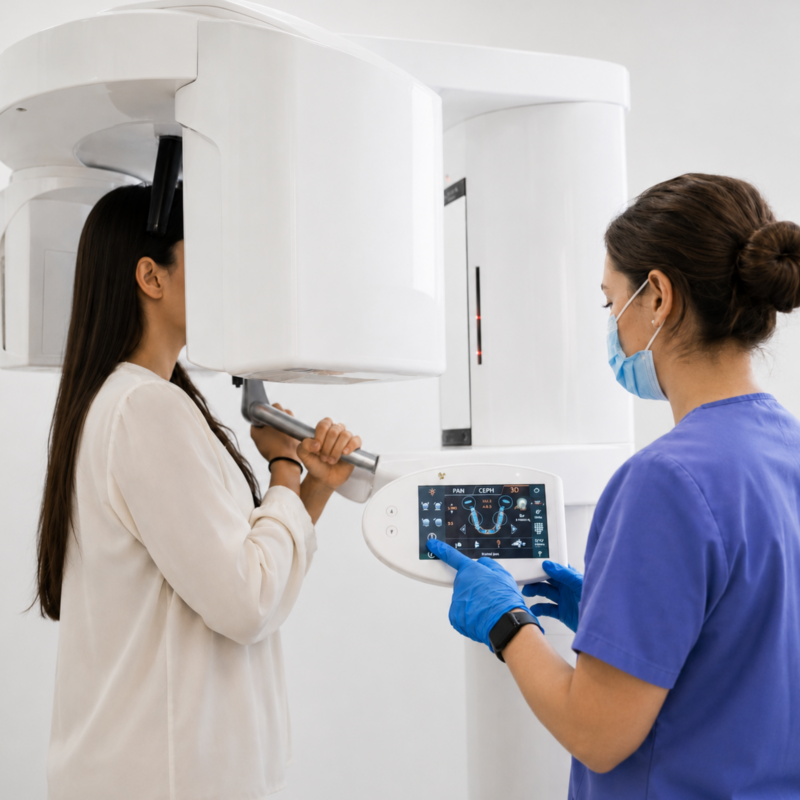
Many people assume orthodontic treatment is only suitable for teenagers. However, adults can also straighten their teeth using modern orthodontic techniques. Advances in treatment methods mean that teeth alignment can be improved later in life with options designed to be more discreet and convenient.
Adults often explore orthodontic treatment to address concerns such as crowding, spacing, or bite irregularities that affect both appearance and function.
This article explains how orthodontic treatment works for adults, which treatment options may be available, and what patients should expect when considering teeth straightening later in life.
What Is Adult Orthodontic Treatment?
Adult orthodontic treatment refers to the use of braces or clear aligners to improve the position of teeth in adult patients. The aim is to correct alignment problems, improve bite function, and create a healthier, more balanced arrangement of the teeth.
Treatment works by applying controlled pressure to the teeth over time, allowing them to move gradually within the surrounding bone. As the teeth shift, the supporting tissues adapt to stabilise their new positions.
Although orthodontics is often associated with younger patients, tooth movement remains biologically possible throughout adulthood.
What will I gain from an orthodontic treatment?
Adults may consider orthodontic treatment for both functional and aesthetic reasons. In some cases, alignment problems were never treated earlier in life, while in others the teeth may have shifted gradually over time.
Common reasons adults explore orthodontic treatment include:
- crowded or overlapping teeth
- gaps between teeth
- bite problems such as overbite or crossbite
- teeth that have moved since previous orthodontic treatment
- improving overall smile balance
Orthodontic treatment may also support other dental procedures. For example, braces can sometimes be used to close gaps caused by missing teeth or to create the correct space for future tooth replacement.
When space is created, replacement options may include:
- Resin-bonded dental bridge – a replacement tooth attached to neighbouring teeth
- Conventional dental bridge – a restoration supported by teeth on either side of the gap
- Dental implant – a replacement tooth supported by a titanium implant placed in the jaw bone
Orthodontic treatment can sometimes form part of a wider dental treatment plan.
How visible are the braces?
Fixed braces, often known as train tracks, are available in tooth coloured varieties that blend in with the natural colour of teeth. The wires used to straighten teeth can be coated with a tooth coloured material to make them less visible.
It is also possible to have the fixed braces adhered to the back of your teeth (lingual braces) so that they are not visible. These are much less noticeable, and they are picked up by the tongue, in the same way as train tracks can rub on the cheeks and lips.
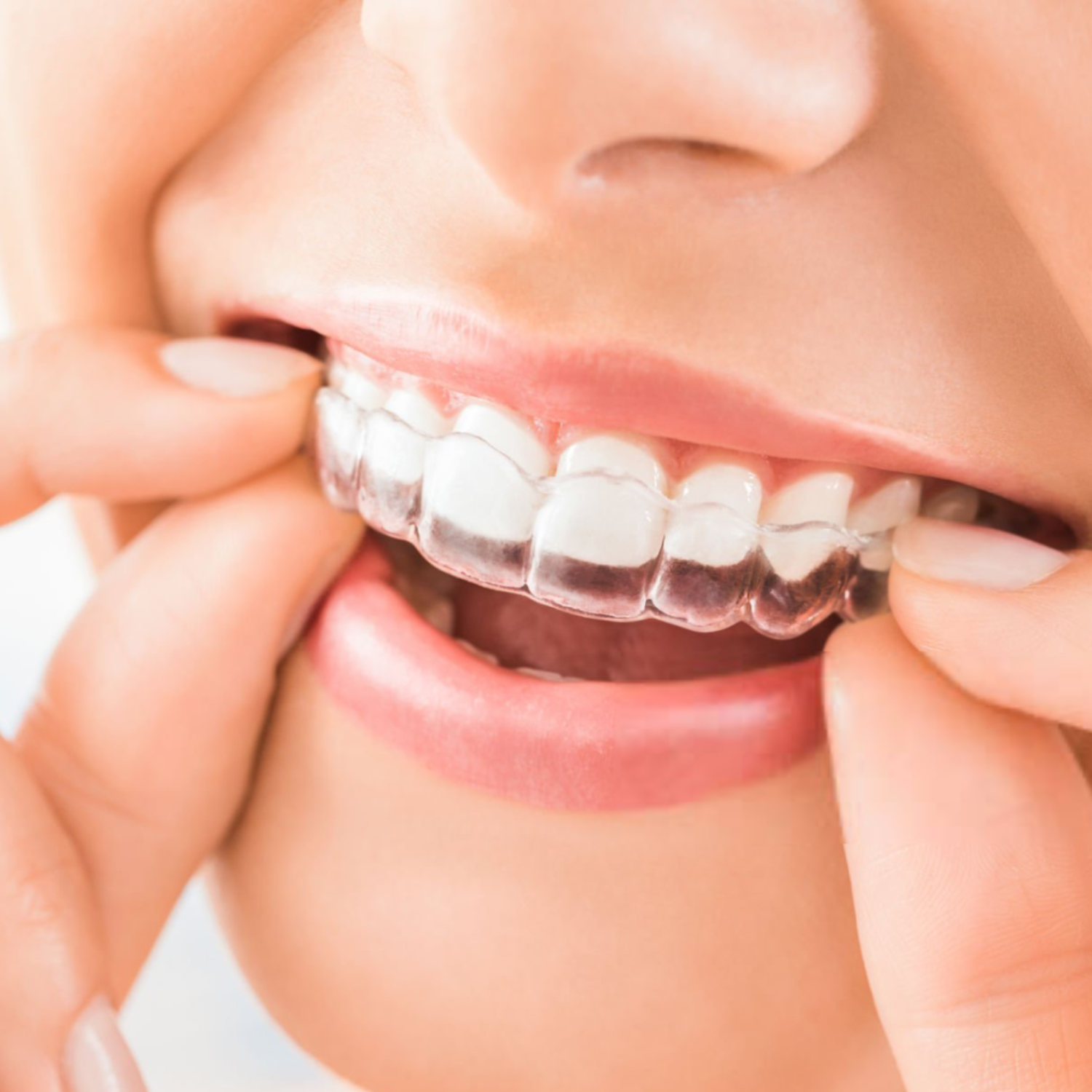
Other types of braces include removable clear braces. These are made up of a series of appliances, which look like clear, transparent plastic slips that sit snuggly over the teeth. They are worn day and night to achieve the best outcome but should be removed to eat and drink. The appliances are changed to the next set every ten days to two weeks, and there will be periodic visits to the orthodontist to review progress, and provide the next few sets of appliances. One brand manufacturing clear braces is Invisalign, though there are many companies making the same type of product.
These two types of braces (fixed and removable clear braces) are the most likely type of brace that will be used on an adult.
Is it always possible to have braces as an adult?
Most of the time the answer is yes. Certain situations in adults, such as severe issues with the bite or where the lower jaw is too small or too big, cannot be corrected with braces alone and may require a combination of jaw surgery and orthodontics.
If you have tooth decay or gum disease, it is very important to treat this before orthodontic treatment is started.
Some people may not be able to have orthodontic treatment due to the condition of their gums, and possibly even their teeth.
Will any of my teeth need to be removed?
If space is needed to straighten teeth or correct the bite, teeth may need to be removed. In certain situations, teeth can be narrowed down in width (interproximal reduction). A detailed assessment and planning is always needed, and the orthodontist should be offering you options.
How long will the treatment take?
Simple straightening can sometimes be carried out in just a few months. Usually the more complex the problem, the more time is required to rectify it. A short course of treatment can create limited changes. Retainers must be worn to hold the teeth once the braces are finished in order to stop the teeth from moving back to where they came from , and it is generally accepted that retainers should be used for life, albeit just for a few nights a week.
Will it be painful?
Your teeth are likely to be sore for between one and five days each time the brace is adjusted. If necessary, simple painkillers can be taken to help. If the brace rubs your lips or cheeks, you can use some orthodontic relief wax to help with this. Often you will get used to the sensation and notice any discomfort less and less through the treatment.
How often will I need an appointment?
If you are having fixed braces, once the brace has been fitted, you will need regular appointments for it to be adjusted. This may be every four to eight weeks.
The required frequency of attendance is similar for people having orthodontic treatment with removable clear braces.
Do I still need to see my regular dentist?
Yes. It will be important that you still have check-ups with your regular dentist throughout orthodontic treatment so that your teeth can be checked for tooth decay and gum disease.
Studies show that people who are having orthodontic treatment are more likely to have tooth decay and gum disease develop during the treatment.
For the same reasons you should also be seeing the hygienist every three months.
Will I need to wear another brace once the treatment has finished?
You will need to wear a retainer once your brace treatment finishes. Retainers may be fixed (a metal wire adhered onto the back of your front teeth) and/or removable - a clear plastic slip that snuggly covers your teeth. Your orthodontist will advise you on what will work best for you.
How long will I need to wear the retainer?
You will be advised to wear your retainer regularly for as long as you wish your teeth to remain straight. Changes in the position of your teeth can continue throughout life and are part of the normal ageing process.
The only way to have permanently straight teeth is to wear a retainer on a part-time basis for life.
How much will it cost?
This depends on the difficulty of your case and the type of brace used. Costs may vary from around £2000 to £6500, but some treatments may be more costly.
Considering orthodontic treatment?
More information
Braces are a great option regardless of your age.
Braces can help make your teeth and gums more healthy as well as improving your bite, and making you more confident about yourself.
More
from the blog

Blog /News
500 miles. 11,000m of climbing. One important cause.
Together we can make a difference
Read more
Blog /Offers
Free Invisalign Consultations This Summer
Explore clear aligners with complimentary whitening when you start treatment
Read more