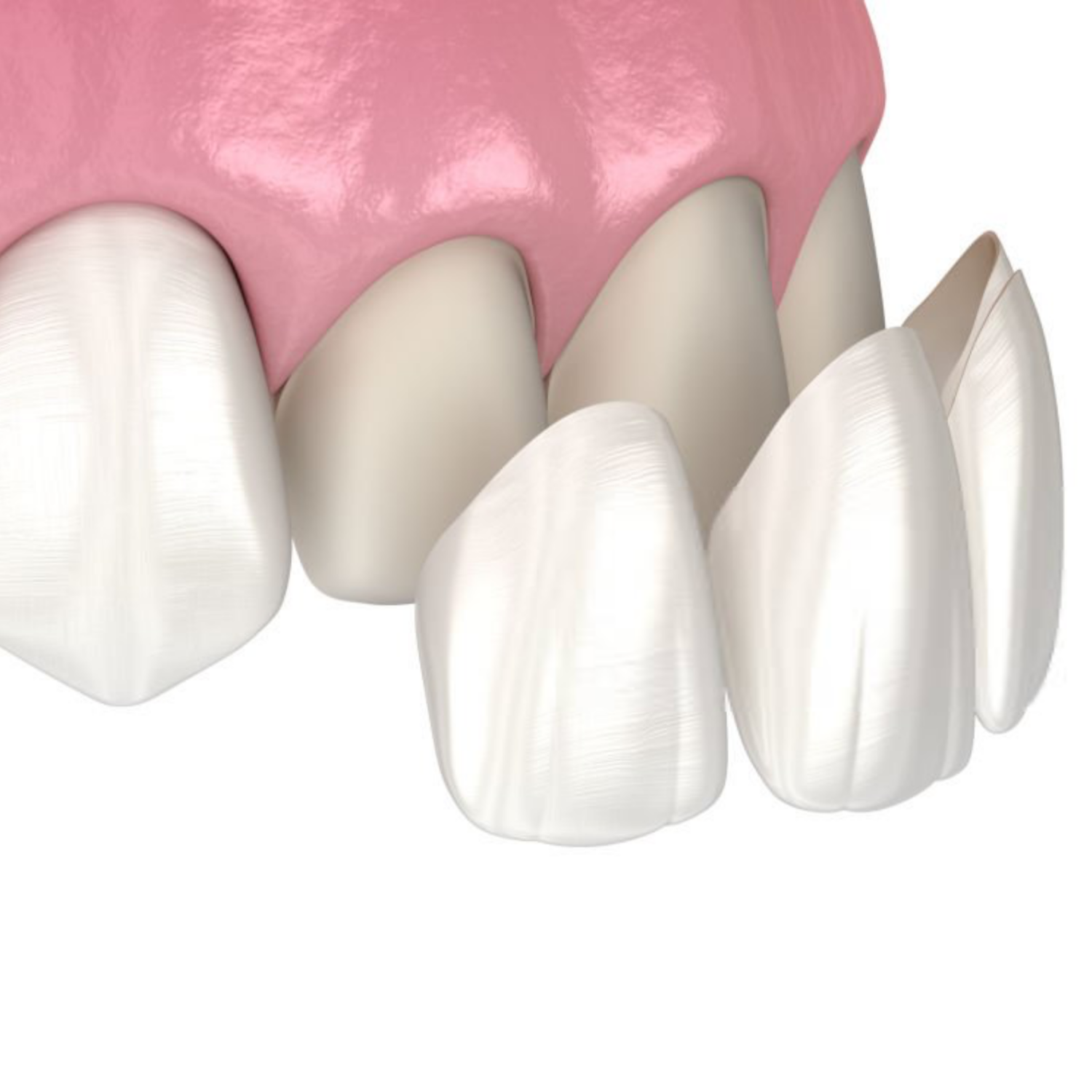
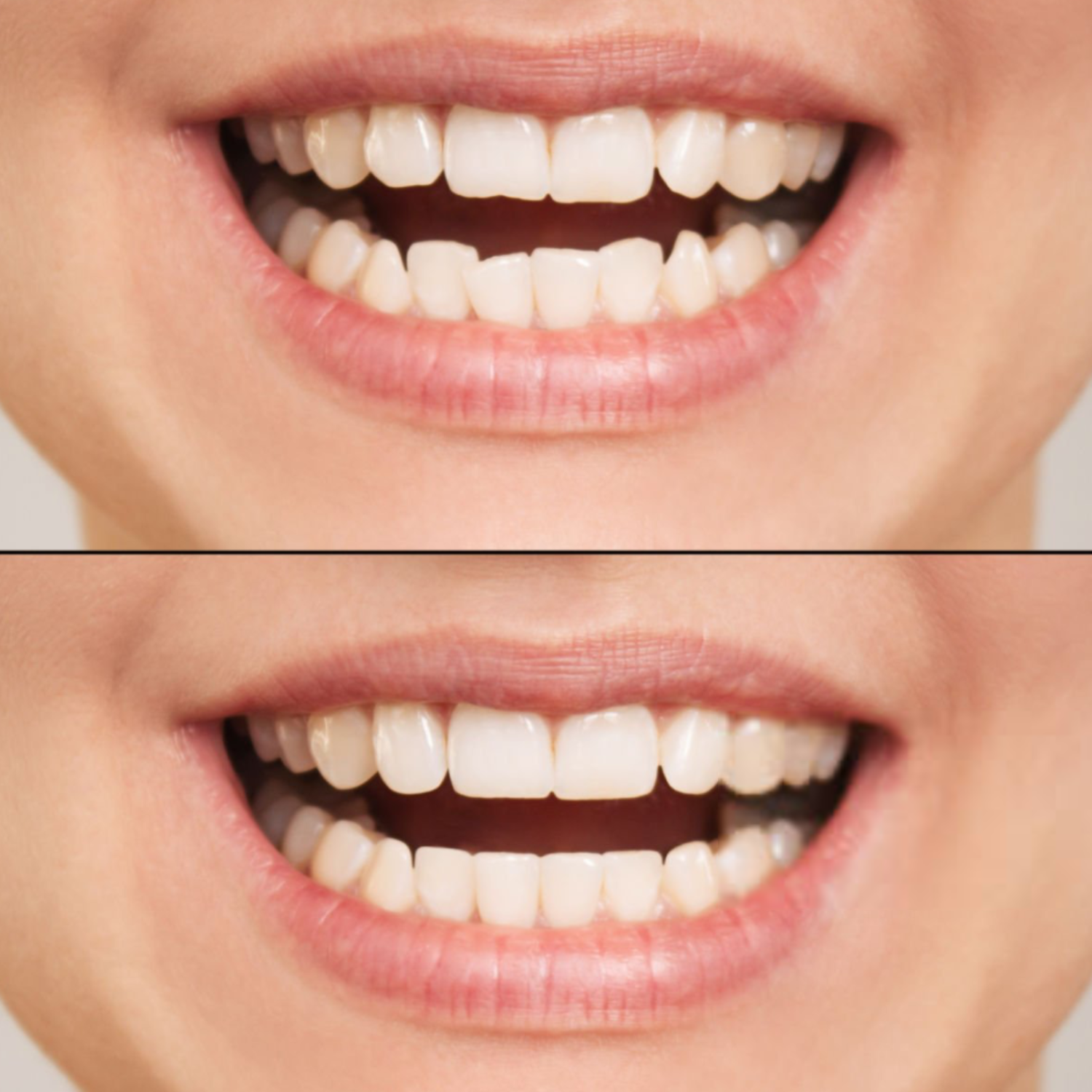
Cosmetic dentistry offers effective solutions for improving the appearance of teeth affected by discolouration, chips, gaps, or irregular shape. Two of the most commonly requested treatments are veneers and composite bonding. Although both aim to enhance the smile, they differ significantly in materials, clinical approach, longevity, maintenance requirements and suitability.
This article provides a comparison of veneers vs composite bonding, helping patients understand how each treatment works and which option may be more appropriate for their individual needs.
Veneers are widely used in cosmetic dentistry to address:
- Severe or intrinsic tooth discolouration
- Worn or uneven teeth
- Fractured teeth
- Gaps between teeth
- Minor alignment irregularities
- Where orthodontics is not desired or suitable
Types of intrinsic tooth discolouration may include fluorosis, trauma-related pulpal damage, age-related dentine darkening, developmental enamel defects (such as hypoplasia), medication exposure during tooth development (e.g. tetracycline or doxycycline), or teeth that have undergone root canal treatment.
Veneers are often considered a definitive cosmetic solution due to their durability and superior aesthetics.
CLINICAL PROCESS
- A small amount of enamel is typically removed to ensure a precise fit and long-term bonding
- Digital scans or impressions are taken
- Veneers are fabricated in a dental laboratory by skilled dental technicians
- Final placement occurs at a subsequent appointment following a try-in and shade assessment
EVIDENCE AND LONGEVITY
Clinical studies indicate that porcelain veneers can last 10–15 years or longer when placed correctly and maintained with good oral hygiene. Their ceramic composition makes them highly resistant to staining from tea, coffee, red wine and smoking.
Composite bonding is widely used in cosmetic dentistry to address:
- Small chips or fractures
- Worn or uneven tooth edges
- Minor gaps between teeth
- Slight irregularities in tooth shape
- Localised discolouration or surface defects
- Subtle improvements in symmetry and smile balance
- Cases where a conservative, additive approach is preferred
Composite bonding may be particularly suitable when the underlying tooth structure is healthy and only minor cosmetic changes are required. It is often used to improve the appearance of front teeth without significant drilling or alteration of the natural enamel.
Unlike porcelain veneers, composite bonding is usually applied directly to the tooth in one appointment. The material can be shaped, polished and repaired relatively easily, making it a flexible treatment option for patients who want a conservative improvement to their smile.
CLINICAL PROCESS
- The tooth surface is cleaned and prepared
- The appropriate composite shade is selected to match the surrounding teeth
- A tooth-coloured resin material is applied directly to the tooth
- The composite is carefully shaped to improve contour, symmetry and aesthetics
- The material is hardened using a curing light
- The final restoration is polished to achieve a smooth, natural-looking finish
EVIDENCE AND LONGEVITY
Composite bonding typically lasts 3–7 years, depending on oral hygiene, diet, bite forces, smoking, tooth grinding and maintenance. Composite resin is more prone to staining, chipping and surface wear than porcelain; however, one of its main advantages is that small defects can often be repaired without replacing the entire restoration.
Regular dental examinations, hygiene appointments and careful maintenance can help extend the lifespan of composite bonding and preserve its appearance over time.
There is no universally “better” option — the choice depends on clinical, aesthetic, personal lifestyle factors and long-term goals.
Veneers may be more suitable if:
- You want a long-term cosmetic solution
- Teeth are heavily discoloured, worn or structurally compromised
- Maximum aesthetic refinement and colour stability is required
Composite bonding may be more suitable if:
- Changes are minor or conservative
- You prefer a reversible treatment or additive treatment
- Budget or time is a consideration or you are exploring cosmetic dentistry for the first time
A comprehensive dental examination is essential before deciding, as underlying tooth structure, bite alignment, gum health, parafunctional habits and oral health all influence suitability.