If your teeth do not line up, it usually means there is some degree of misalignment or a bite issue (malocclusion). You might notice this when your teeth do not meet evenly, feel uncomfortable when biting, or appear uneven in photos.
This can affect not only how your teeth look, but also how your bite functions—sometimes leading to uneven wear, difficulty chewing, or the need for treatment as part of a wider dental plan, such as preparing for implants or rebuilding worn teeth.
What are the signs of a bite problem or misaligned teeth?
Common signs include:
- Crowded or overlapping teeth
- Gaps between teeth
- Protruding front teeth
- Difficulty biting evenly
- Jaw discomfort
- Visible tooth wear
These concerns may be cosmetic, functional, or a combination of both.
What does it mean if your teeth do not line up?
Teeth that do not line up usually indicate misalignment or a bite issue, where the upper and lower teeth do not meet in a balanced way.
A healthy bite allows forces to be spread evenly across the teeth. When this balance is off, certain teeth may take more pressure than others. Over time, this can lead to wear, chipping, or discomfort.
You might notice your bite feels uneven, or that some teeth appear to be wearing down more quickly. While this can affect how your teeth look, it is often just as important how they function when you bite.
In some cases, orthodontic treatment is used as part of a wider dental plan. This may involve improving tooth position before placing implants, restoring worn teeth, or stabilising the bite to support long-term oral health.
Common reasons why teeth do not line up
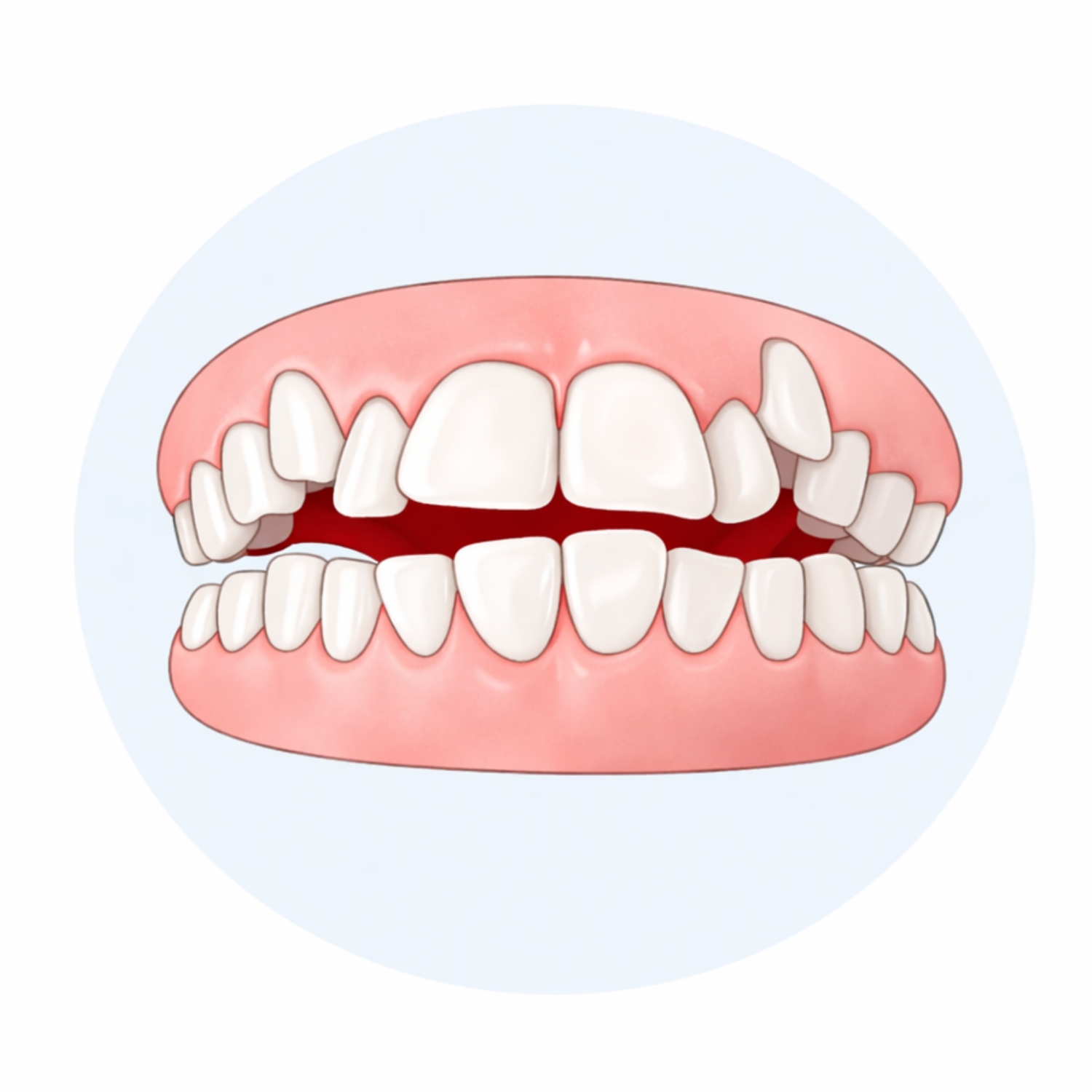
Crowded or overlapping teeth
If your teeth appear twisted, overlapping, or pushed out of position, this may indicate crowding.
Crowding occurs when there is not enough space in the jaw, causing teeth to overlap or rotate.
You might notice your teeth look bunched together or are harder to clean. Crowding can affect both appearance and oral hygiene, and may also lead to uneven pressure when biting.
- May make cleaning more difficult
- Can increase risk of gum problems
- May worsen over time
- Often treatable with different approaches
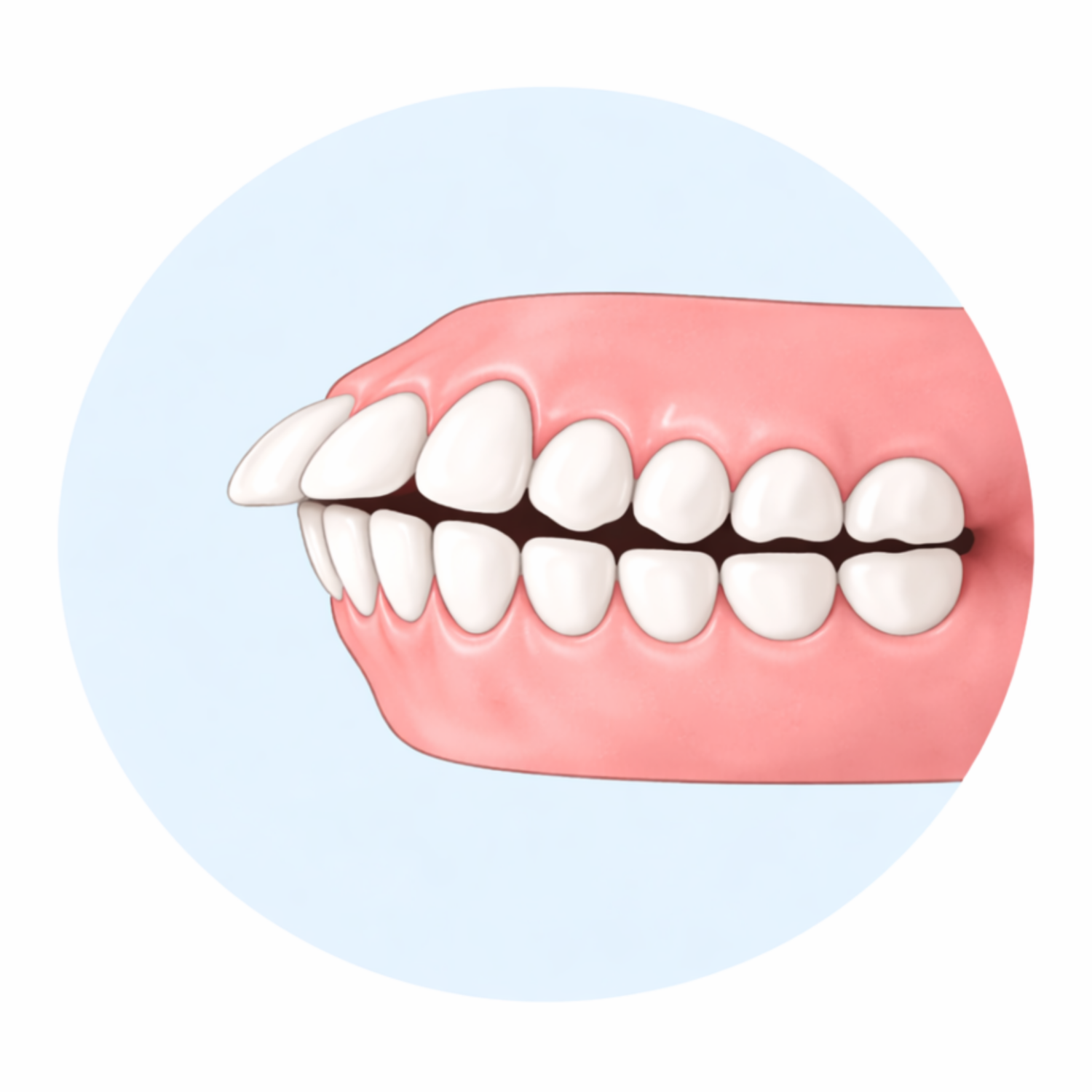
Protruding front teeth (overjet)
If your upper front teeth sit noticeably further forward than your lower teeth, this is known as an overjet.
An increased overjet occurs when the upper front teeth sit further forward than the lower teeth.
A mild overjet is normal, but a more pronounced one may increase the risk of damage to the front teeth. Some people also find it harder to close their lips comfortably.
- Increased risk of trauma
- May affect facial profile
- Can involve jaw position
- Treatment depends on severity
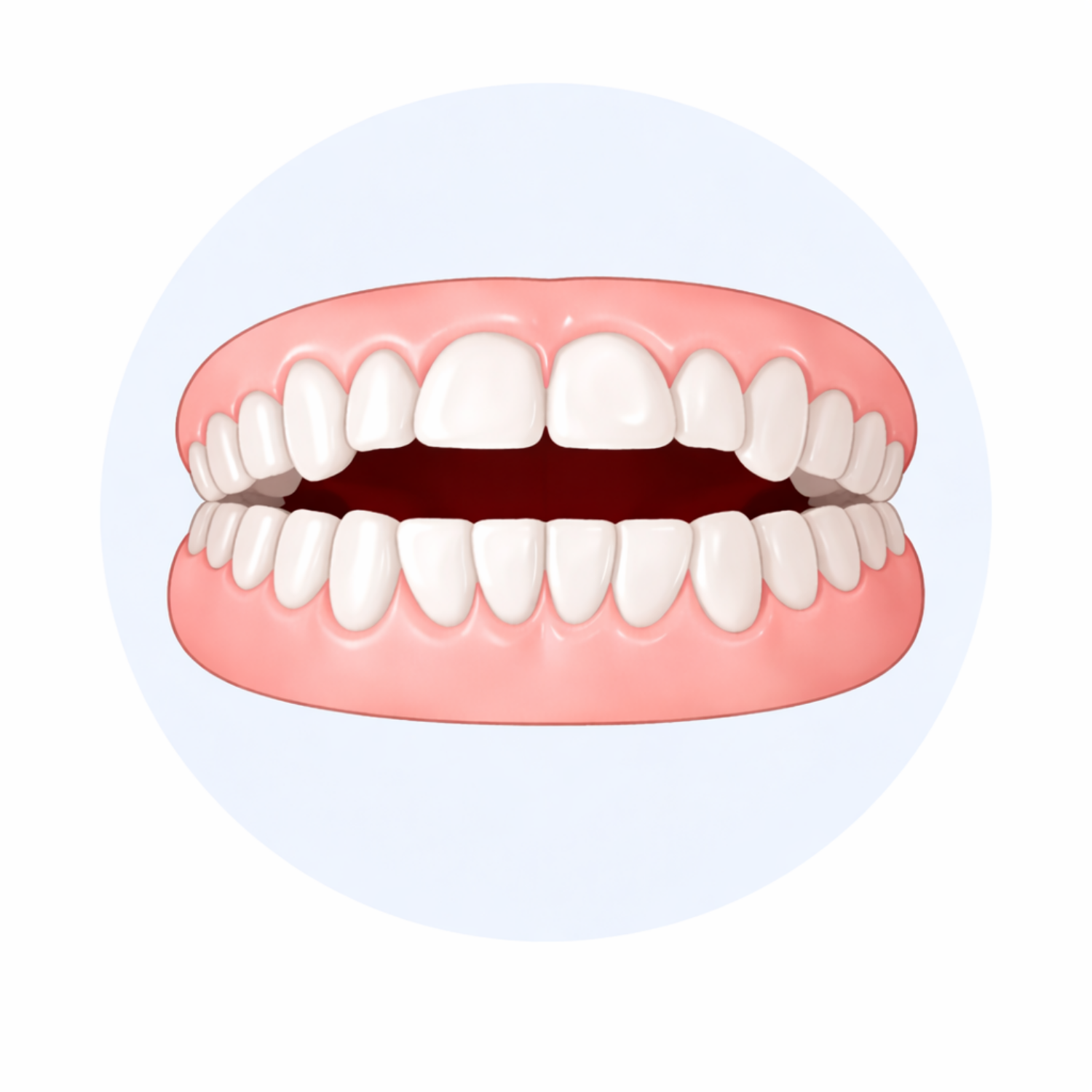
Bite problems (open bite or deep bite)
If your front teeth do not touch when you bite, or if they overlap too much vertically, this may indicate a bite problem such as an open bite or deep bite.
If your teeth do not meet evenly when biting, this may indicate a bite problem.
You might notice that some teeth do not touch at all, or that your front teeth overlap too much. These patterns can place extra pressure on certain teeth, which may lead to wear or discomfort.
- Uneven force distribution
- May affect chewing
- Can lead to tooth wear
- Requires assessment
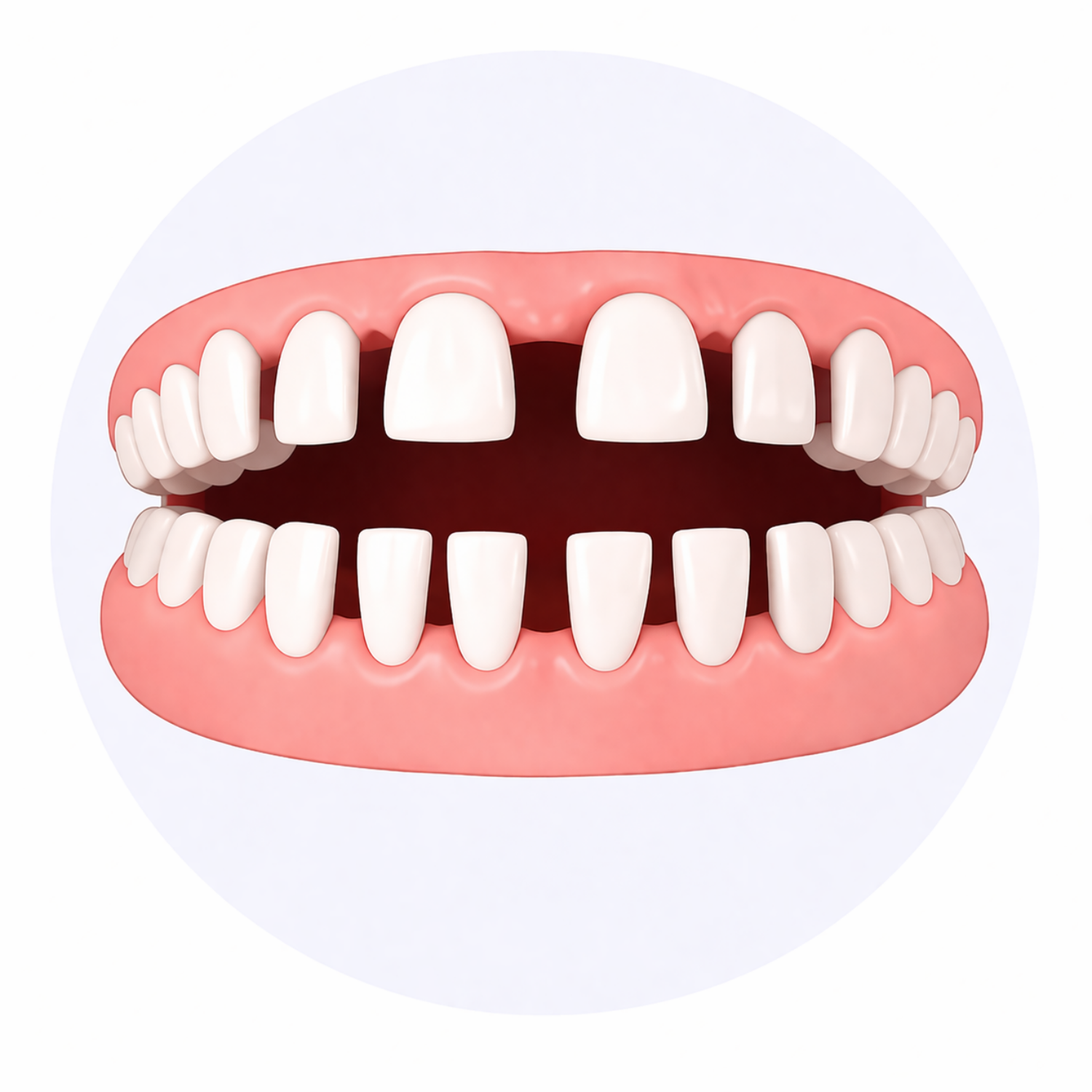
Gaps between teeth
If you can see visible spaces between your teeth, particularly at the front, this is referred to as spacing or gaps.
Gaps occur when there is extra space between teeth, often due to size differences or missing teeth.
Some gaps are purely cosmetic, while others can affect how your teeth function together. In some cases, teeth are repositioned before closing spaces or placing restorations.
- May be aesthetic or functional
- Important in treatment planning
- Stability depends on cause
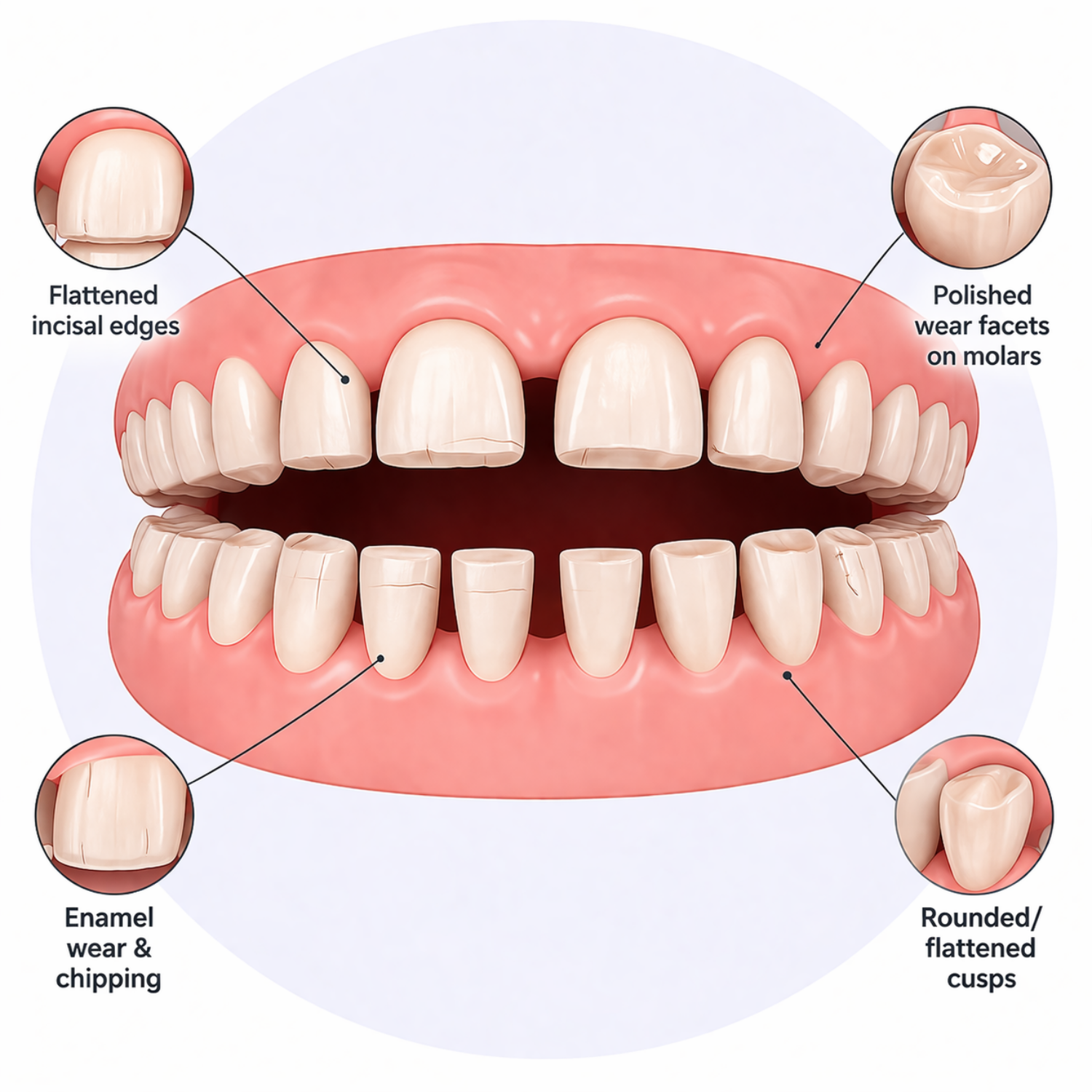
Tooth wear, grinding, or jaw discomfort
If your teeth look shorter, flatter, or slightly chipped, this may be a sign of tooth wear, often linked to how your bite functions.
Tooth wear, grinding, or jaw discomfort can sometimes be linked to how your bite functions.
You may notice your teeth looking shorter or flatter over time. This can happen when certain teeth take more pressure due to an uneven bite.
In some cases, alignment is improved before repairing worn teeth to help protect them long term.
- May indicate bite imbalance
- Often part of wider care
- Not all grinding is alignment-related
- Requires professional assessment
How orthodontics fits into wider dental treatment
Orthodontics is sometimes used before other dental treatments to improve alignment and create a more stable bite.
If you are considering treatments such as implants, crowns, or rebuilding worn teeth, the position of your teeth becomes important. Aligning teeth first can help ensure that further treatment is more predictable and long-lasting.
Orthodontics may be used to:
- Create space for implants
- Align teeth before restorations
- Improve bite balance
When might treatment not be necessary?
Not all misalignment requires treatment, especially if it does not affect function, oral health, or long-term stability.
Some people have minor irregularities that remain stable and do not cause problems. Decisions are usually based on function, comfort, and long-term risk rather than appearance alone.
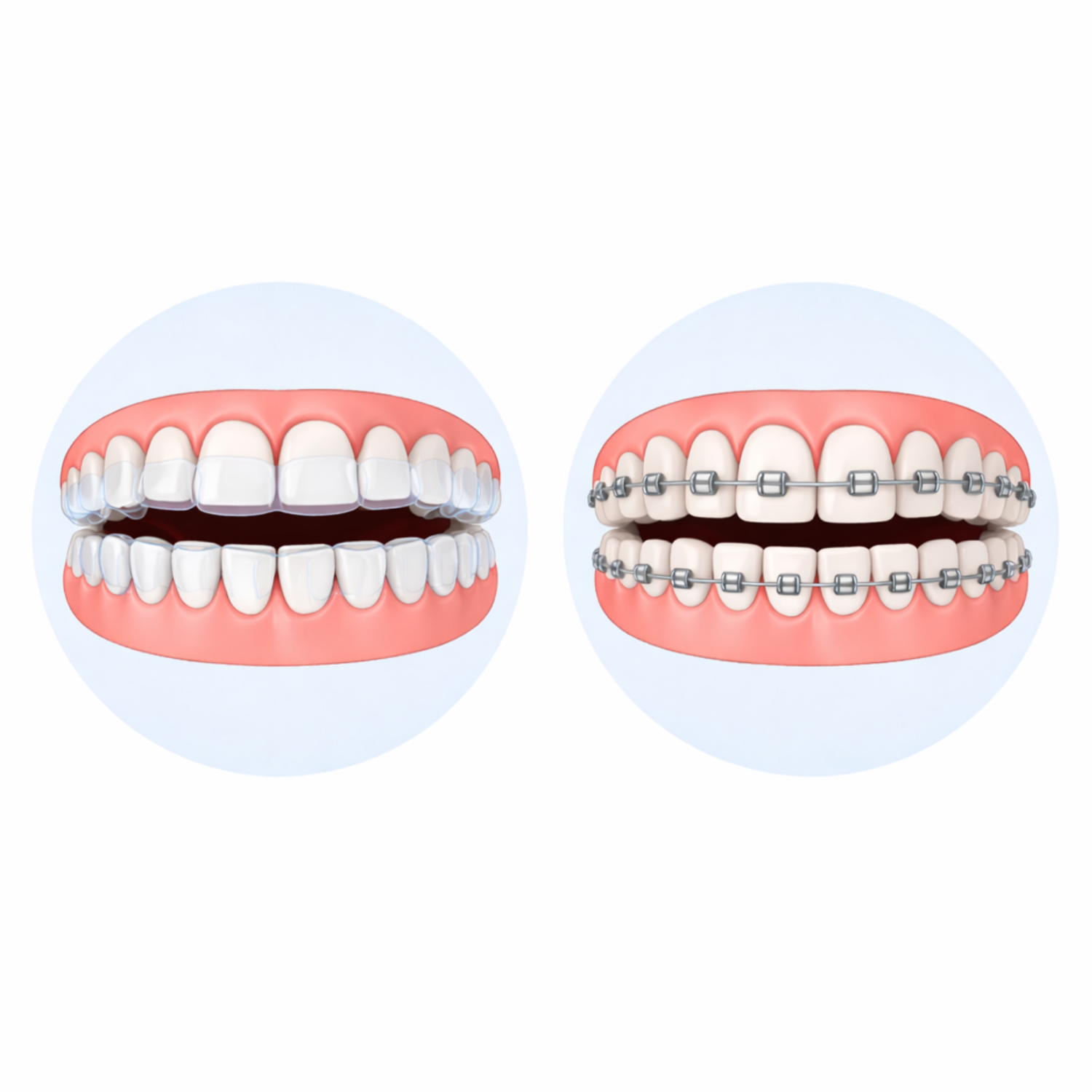
What treatment options may be used?
Treatment options vary depending on the type of misalignment, how the bite is affected, and the complexity of movement required.
Common approaches include clear aligners, removable appliances, and fixed braces. Some treatments are mainly used to improve alignment, while others are designed to correct how the teeth and jaws work together.
For example, clear aligners are often suitable for mild to moderate cases, while more complex bite problems may require fixed appliances or a combination of approaches.
Not all appliances are suitable for every situation, and the most appropriate option depends on individual clinical needs and treatment goals.
When should you consider an assessment?
You may want to have your bite assessed if your teeth do not meet evenly, feel uncomfortable when biting, or appear to be changing over time.
It can also be helpful to check alignment before treatments such as implants or rebuilding worn teeth, where tooth position plays an important role in long-term outcomes.
Conclusion
Teeth that do not line up may reflect differences in alignment, bite, or both. While some cases are mainly cosmetic, others affect how the teeth function and wear over time.
Understanding these differences helps ensure that any treatment supports both appearance and long-term stability, rather than addressing one aspect in isolation.
Commonly asked questions
Is it normal for teeth not to line up perfectly?
Minor irregularities are common, but more significant misalignment may affect function or long-term dental health.
Can misaligned teeth cause tooth wear?
Yes. Uneven contact can place excess pressure on certain teeth over time.
Do I always need braces if my teeth are crooked?
Not always. Treatment depends on severity and whether there are functional concerns.
Can orthodontics help before implants?
Yes. It can improve spacing and alignment for more predictable results.
What is a normal bite?
A normal bite allows even contact across the teeth with a slight overlap at the front.
More
from the blog

Blog /News
500 miles. 11,000m of climbing. One important cause.
Together we can make a difference
Read more
Blog /Offers
Free Invisalign Consultations This Summer
Explore clear aligners with complimentary whitening when you start treatment
Read more